
Retailers are pouring billions into capturing a greater share of the fast-growing beauty market, fueled by a social-media-savvy consumer base that is more informed about cosmetics, ingredients and self-care than ever before. At the same time, nimble new entrants have reshaped how the industry operates, challenging traditional retail models and accelerating innovation.
Global retail spending on beauty products reached $440-billion in 2024, growing at seven percent a year and consistently outpacing overall retail spending, according to McKinsey. The global sector, when broader wellness and aesthetic services are included, exceeds $650-billion. In South Africa, the beauty and personal care market grew seven percent year-on-year to $3.9-billion in 2024 (according to Euromonitor International) – remarkable in an economy that is barely growing at all. By 2028, local sales are forecast to reach R98.2-billion, up from R42.3-billion in 2015.
What’s driving this? A convergence of forces: social media, celebrity culture, a younger and more informed consumer, the mainstreaming of cosmetic procedures, and a post – Covid reawakening of self-care. The result is an industry that has been fundamentally, and perhaps, permanently transformed.
The old beauty business ran on glossy advertising, department store counters and brand loyalty built over decades. That model has been upended. Today, new brands are built through founder stories creator ecosystems and the relentless scroll of TikTok and Instagram. Much of the time they skip stores altogether, selling directly to consumers online – and some have grown into billion-dollar businesses in just a few years.
There’s been a social media revolution. Rihanna launched Fenty Beauty in 2017 and it is now valued at up to $2-billion. Selena Gomez’s Rare Beauty, founded in 2020, commands a similar valuation and has around 240-million Instagram followers. Hailey Bieber’s Rhode, launched in 2022 as a direct-to-consumer skincare brand, was acquired by e.l.f Beauty last year in a deal valued at up to $1-billion. Kylie Jenner founded Kylie Cosmetics in 2015 at the age of 18 and in 2019 Coty bought a 51% stake in the group. Images of: Rihanna (Fenty Beauty), Selena Gomez (Rare Beauty), Hailey Bieber (Rhode), Kylie Jenner (Kylie Cosmetics):

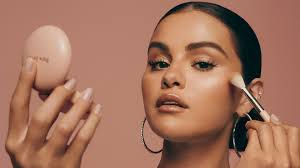
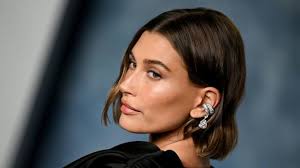
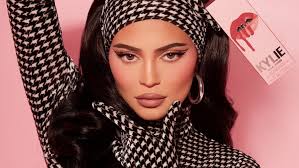
These are not vanity projects – they are backed by clinical testing, ingredient transparency and genuine consumer loyalty. Valuations are driven as much by social reach and brand influence as by profits.
The pressure on consumers to look good has intensified alongside all of this. Social media has normalized cosmetic procedures once considered extreme. More than 20-million non-surgical aesthetic procedures were performed globally in 2024, up nearly 40% from 2020, according to the International Society of Aesthetic Plastic Surgery. The range on offer – botox, fillers, chemical peels, laser treatments – has exploded, and younger consumers are entering this world earlier than ever.
For physical retailers, beauty has become a strategic priority rather than a supporting category. Stores that once devoted a few aisles to cosmetics are reinventing themselves as immersive beauty destinations, adding treatments, facials, experiential events and expert services alongside products. The transactional aisle is giving way to the beauty hub.
In South Africa, this shift was accelerated by the decline of the traditional department store. As Edgars contracted and Stuttafords closed, the dedicated beauty space they once occupied vanished. Into that gap have moved supermarkets, value clothing chains, pharmacy groups and specialist retailers – all competing for a share of what Trade Intelligence estimates is a R65-billion-a-year local beauty market.
Critically, these retailers are no longer just stockists. They are becoming brand builders, launching private labels, expanding their ranges and tailoring products to local tastes. The economics are compelling: beauty products are purchased frequently, carry strong margins, require relatively little raw material cost relative to their retail price, and are less sensitive to economic downturns than most categories. The so-called “lipstick effect” – a term coined by Leonard Lauder, whose mother Estee founded her empire in 1946 – holds that in hard times, consumer still treat themselves to small luxuries. Beauty is recession-resistant in ways that fashion and electronics are not.
So who’s wining locally? Woolworths holds more than 20% of the local beauty market and is investing aggressively to grow it. Beauty is one of its fastest-growing categories, with revenue more than doubling to over R1-billion in the past years – a figure the group expects to double again by 2028. It now owns a beauty manufacturing plant, and its WBeauty private label accounts for about a quarter of its beauty sales. Its shelves carry everything from La Mer to Chanel to local brands like Skoon and Skin Functional. It opened its first standalone beauty store in Somerset West over a year ago, modelled on the Sephora concept, and plans to expand beauty across the nine South African countries in which it operates.
TFG (The Foschini Group) is pursuing a similar playbook. Its BeautyBox standalone concept – built around in-house ranges developed across Foschini, Markham, Exact and The FIX – is expanding, with a Cape Town store opening at Bayside Mall. Beauty generated R1.2-billion in annual sales for TFG in the year to March 2025, and the group has set a target of R5-billion within five years. Pepkor, Africa’s largest apparel retailer, is also entering the category with a new beauty range.
The retail shape is changing. The pharmacy chains have been in beauty longest and remain dominant. Clicks, the country’s largest pharmacy group, reports that skin, hair and personal care now outpace pharmaceuticals as contributors to its R47.8-billion in turnover. Beauty and personal care account for 34% of Clicks’ sales, and private labels make up over 31% of its front-shop revenue.
The chain has upgraded the beauty halls of 44 stores and plans to roll the concept out across more of its nearly 1000 locations. Its Beauty Playground events (which alternate annually between Johannesburg and Cape Town) events attract crowds comparable to major sporting occasions, in how they sell out so quickly. Clicks also owns a 22% stake in ARC, a luxury beauty retailer that recently converted its flagship Joburg store into the largest beauty destination on the continent, as well as Sorbet, the country’s biggest professional beauty salon chain, acquired in 2023. Dis-Chem, meanwhile, has built its beauty offering around a wide product range, in-store grooming services and experiential events like its World of Beauty showcase.
New brands are reshaping the industry. South Africa is seeing the emergence of homegrown brands rooted in African identity and indigenous ingredients – marula oil, baobab, rooibos – that are increasingly prominent on retailer shelves. Standout local names include Enough, which uses upcycled ingredients such as coffee; Dewdrop Skincare, featured in Vogue, Vanity Fair and Glamour UK; and Skin Creamery.
Globally, the major conglomerates are buying their way into the new beauty landscape. Estée Lauder acquired The Ordinary. L’Oréal – the world’s largest beauty business – took a majority stake in Medik8, increased its holding in Swiss injectables maker Galderma to 20%, and is buying the beauty division of luxury conglomerate Kering. The message is clear: established players know that relevance now has to be acquired as much as built.
K-beauty and J-beauty have also an outsized influence, reframing the global industry around skin health, ingredient innovation and accessible sophistication. Korean beauty introduced fermented ingredients, sheet masks and lightweight layering textures; Japanese beauty brought precision formulation and functional minimalism. These brands have also disrupted the old equation of price equates to efficacy and showed consumers you could get sophisticated formulations and appealing packaging without luxury pricing.
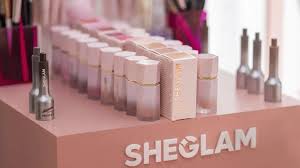
Fast-fashion retailers have also been heading in that direction. Shein launched SheGlam, a direct-to-consumer makeup and skincare range targeting budget-conscious younger shoppers in 2019. H&M and Zara have both expanded into beauty. And social commerce platforms like TikTok Shop are creating entirely new retail pathways. Image of SheGlam products:
Perhaps the most significant shift is in the consumer herself. Shoppers today arrive at the beauty counter – or the checkout page – already knowing what hyaluronic acid does, why niacinamide matters and what to look for on an ingredient list. This has raised the bar for every brand, large and small.
“The big shift has been in bringing the consumer to the centre of product innovation and reformulation decisions,” says Michael ten Hope, CEO of CAVI Brands, which represents high-end beauty labels locally. “It’s more consumer-centric than before.”
TFG CEO Anthony Thunström agrees. A proliferation of independent brands, he told the Financial Mail, has brought a higher degree of fashionability to a sector once dominated by a handful of multinationals. “There is a lot more innovation and excitement in the sector,” he says – and a growing youth demographic willing to spend on it.
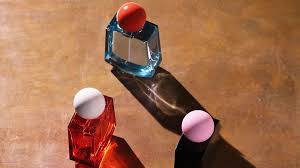
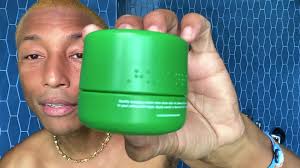
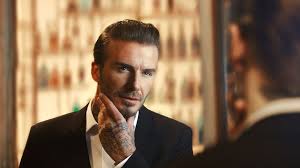
The men’s grooming category is expanding too, again led by celebrity influence: Harry Styles has his skincare brand Pleasing; Pharrell Williams, Humanrace. Footballer David Beckham launched House 99 in 2018 as a grooming and skincare brand in partnership with L’Oreal Luxe. Images of Harry Styles’ Pleasing, Pharrell Williams and Humanrace, David Beckham:
Omnichannel shopping is now the norm. Consumers research online, try products in-store, buy through an app and return via a physical location – sometimes all for the same product. Digital innovations like augmented-reality virtual try-on tools have accelerated online purchasing. Platforms like Takealot and Superbalist have become significant beauty retail channels.
The beauty industry has always been about transformation. What’s new is the scale, the speed and the ambition of those competing to be in it. END