Twenty-eight years ago, Pete Howie was working as a barista in London. He walked into a Seattle Coffee Company in London, watched how espresso was made, and asked the owners if he could take the concept to South Africa.
They said yes, and the first local outlet opened in 1997 in Cavendish Square in Cape Town. A year later, Starbucks acquired Seattle’s entire London estate and wiped the name from the northern hemisphere. The South Africa venture became – by accident – the only Seattle Coffee Company left globally.
Today, Seattle Coffee Company operates over 350 stores nationwide, employs 2000 people, and last financial year crossed R1-billion in annual turnover – growth at about 20% in a market some observers have called saturated. The brand opens 40 to 50 new stores a year and unlike almost every competitor in its category, it does not franchise. It is the largest company-owned (non-franchised coffee chain) in the country.
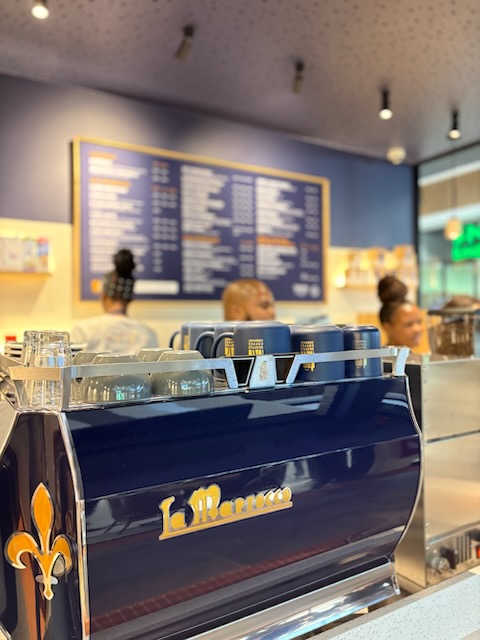
“Not saturated at all,” says Jared Jabour, a director of the company, when asked about the market. “There’s still a massive runway. We’re only starting to understand the emerging consumer – the broader base of South Africans who are beginning to reach for a high-street brand, cup in hand.”
The decision not to franchise was made after some problems after they had franchised early on. “The moment things go wrong in a franchised space, you start to question the model,” says Jabour. “And then sometimes you decide you know better and go out and build your own café.”
The structure is a hybrid. The Western Cape and inland regions – Gauteng and Namibia – are owned and operated directly by the company’s directors. In KwaZulu Natal, the Eastern Cape, Mpumalanga and Limpopo, regional partners own stakes – while Seattle manages their supply chain, designs their stores, and provides operational support.
Sandy Barlow, a partner in the business, says a franchisee who quietly switches to a cheaper cake supplier or lets design standards slip is a problem that multiplies. “A decision – say, rolling out reusable branded mugs across the estate – happens in a single meeting and is implemented immediately”.
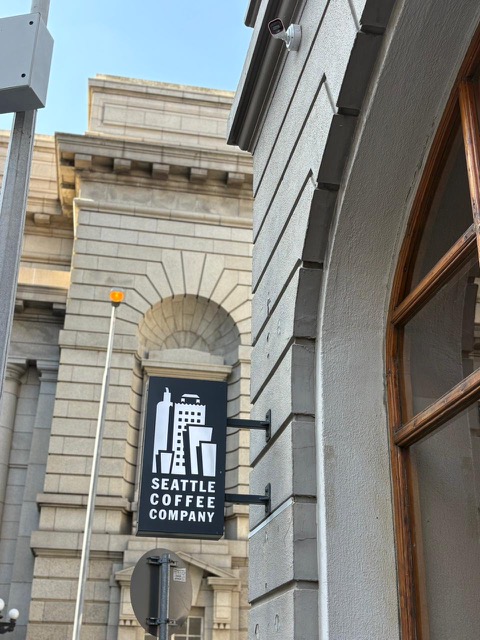
Seattle is majority-owned by Food Lovers Market. Head offices sit in both Cape Town and Johannesburg. And the company roasts its own coffee at its Union Hand Roasted facility in Muizenberg and recently completed a distribution centre in Lords View, outside Johannesburg.
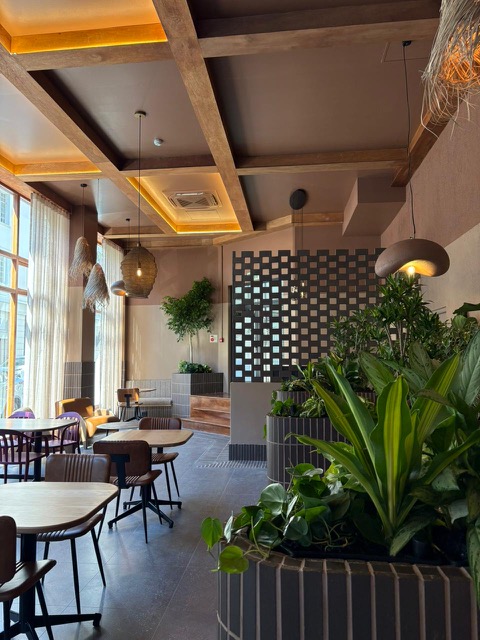
The phrase the company uses to describe itself is “artisanal at scale” – the craft sensibility of a neighbourhoood café, applied across a national footprint. Seattle bakes its own rolls. It sources green coffee beans from across South America and beyond. Its stores are designed for what Barlow calls “sensory appeal”: quiet, deliberate spaces – no branded wallpaper, no cluttered posters – that are meant to feel, in her word, homely. “We want people to feel set apart. Cosy. Like somewhere they actually want to be in a public environment.”
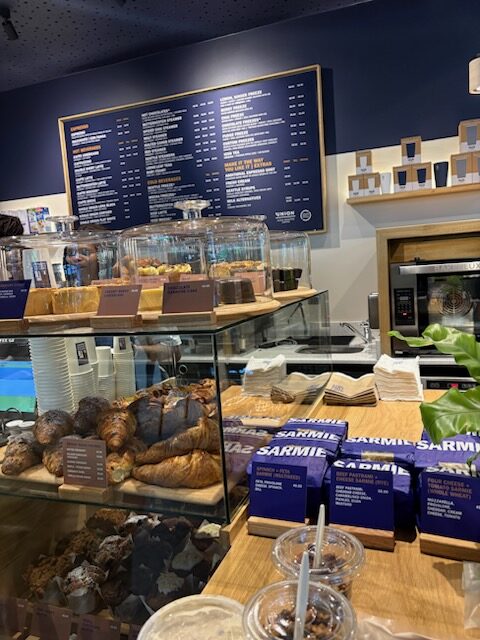
The core store identity is grab-and-go, with space to sit. Average spend runs between R60 and R80 a head. Beverages account for about 80% of café revenue; food – a growing focus – makes up the rest. Coffee margins sit between R55% and 60%. Food is more complex, more wasteful, but it anchors the sales mix and has received significant investment in recent years: new packaging, improved display, a dedicated food department.
On the beverage side, the menu has barely changed – because the customer wants the same thing. The flat white, the tall cappuccino, the double short: these remain the top sellers year after year. “People are becoming more discerning as more brands enter the market,” says Jabour, “but somebody wanting a cappuccino or a latter hasn’t fundamentally changed.” When the weather gets hot, frozen drinks are big sellers.
As to where next, Seattle’s portfolio spans full café locations, forecourt outlets operated in partnership with Sasol an Astron, and a newer format – the MOD, a freestanding pod structure installed adjacent to fuel stations – currently being piloted in Johannesburg. The company opened its first Zimbabwean café in Harare last year and operates approximately 15 stores in Namibia.
Domestically, the emerging middle class outside the major metros is the next frontier. A new regional partnership will bring stores to East London and Mthatha – markets previously underserved.
Jabour is watching a consumer shift with interest. Lower-middle-income South Africans, he says, are beginning to reach for Seattle, or a Starbucks. “They want a national brand in their hand. That’s what the market now wants.” His real competition, he maintains, isn’t another chain. It’s the independent on the corner – the single-site operator with genuine craft and hands-on service. “That’s what we want to achieve. We just do it at national scale.”