
Bootlegger Coffee started as a single Sea Point café and now has 107 locations nationally, sold five million cups of coffee last year, roasted 400 tonnes of coffee year and employs 3500 people directly and indirectly.
It started in 2013 when three cyclists – fitness-obsessed, community -minded, and slightly annoyed that they couldn’t find a decent cup of along Sea Point main road (especially early in the morning) decided to open a coffee shop.
The founders were not catering industry veterans plotting market disruption. They were guys who wanted a proper flat white before a morning ride, and couldn’t find one. The brand’s first iteration was called Woodstock Coffee Company. When a roaster was acquired and needed a name on its side, the founders sat down and asked a more interesting question: not “what should we be called?” but “who are we?”
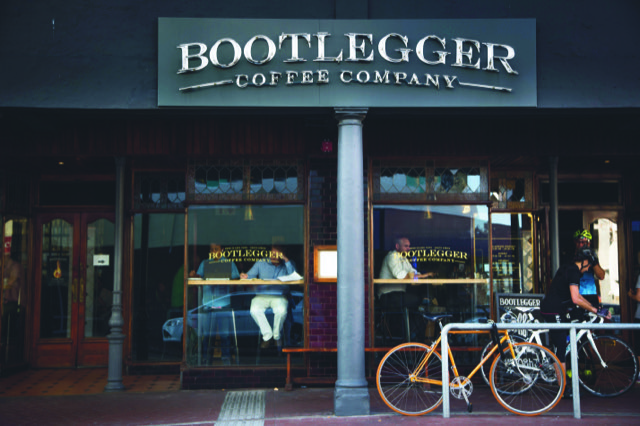
CEO Ricky Ruthenberg says the answer that emerged was vivid and specific. The brand would be male, timeless and slightly lost in time. A young man stuck permanently in a 1920s frame – part James Dean, part Robin Hood. Someone who looked after his community, didn’t cause trouble unless trouble came looking, and never chased a trend in his life. A bootlegger.
From that character came everything: the design language (timeless, never fashionable), the attitude (cool, never excitable), and the name that would eventually stretch from Cape Town to Namibia and beyond.
“We don’t follow trends,” says Ruthenberg. “If anything, we believe we’re trend setters.”
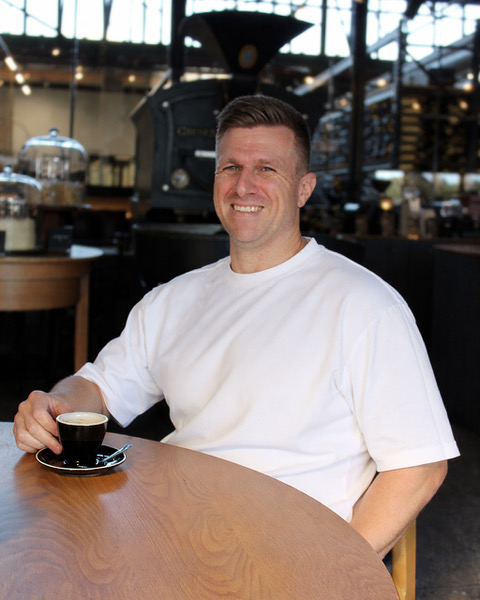
The brand has remained privately owned and privately funded since day one – a deliberate choice in an industry where private equity comes knocking regularly. Growth has been self-funded, controlled and built around a multi-store franchisee model that incentivises operators to grow alongside the brand.
Bootlegger is an all-day café – a full sit-down service, a menu that runs from breakfast through lunch and into dinner at some locations, with an average footprint of 150 to 200 square metres, bigger than most coffee shops.
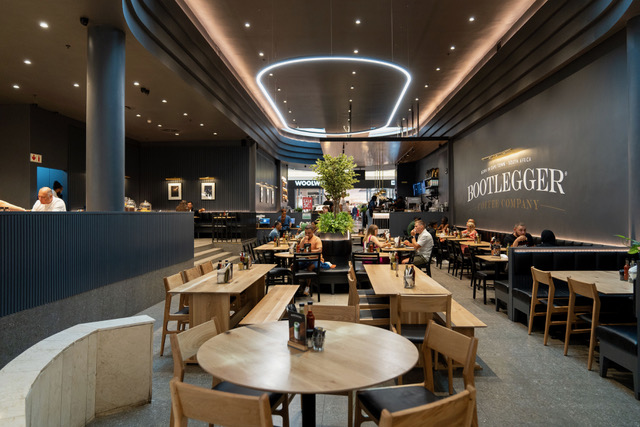
“Coffee brings the margin, food brings the revenue,” says Ruthenberg. Bootlegger’s fuller experience offers reasons to stay, spend more, and return. The average transaction in Johannesburg – where walk-in traffic is lower but visits are longer – often significantly outstrips its Cape Town equivalent, because customers who make the effort to arrive tend to order more: a coffee, a meal, a second coffee, and cake.
Bootleggers also owns the chain and the company owns its supply chain from origin to cup. Green beans are imported directly from Guatemala, Tanzania, Costa Rica, Colombia and Brazil – all Rainforest Alliance certified specialty grade. They arrive at Bootlegger’s 4500 square metre head office and production facility in Cape Town, where an in-house Q Grader – assesses every sample for quality, density, and compatibility with the house blend.
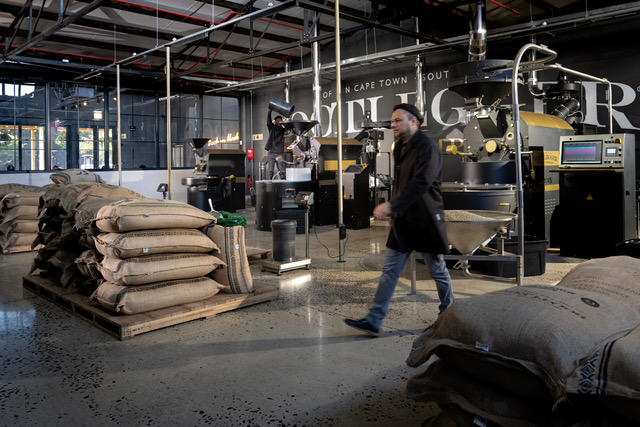
Bootlegger not only a retail café brand but a significant wholesale operation servicing hotels, corporate offices, and other hospitality groups. The company also undertakes extensive white label roasting for third-party brands such as business wanting branded coffee for events.
A centralised bakery of nearly 2000 square metres produces over 4000 croissants daily, distributed nationally via blast-freezing to every store in the network. The two best-selling cakes are chocolate cake and carrot cake – the operation bakes and distributes hundreds of each.
By controlling the value chain, Bootlegger protects its margins where it matters most, while maintaining consistency.
In 2018, Bootlegger officially opened its franchise programme with 18 locations. Started in Cape Town it has about 55% of the business. Johannesburg, far larger and more sprawling, has around 40 locations and represents the group’s most significant current growth opportunity. Cape Town delivers volume through foot traffic; Johannesburg delivers value through spend per head.
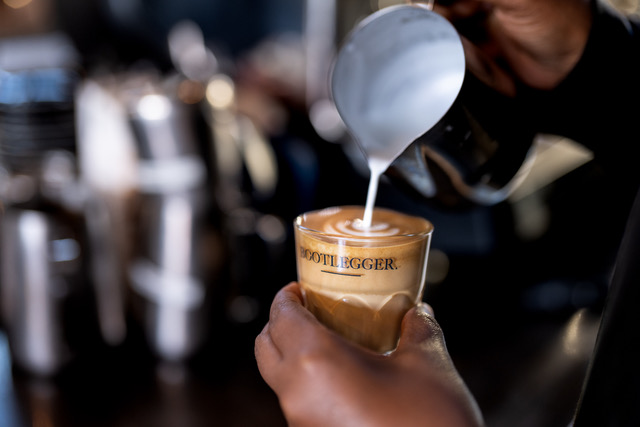
When the brand’s first Sandton store opened in 2017, the founders expected that the brand would be recognised. What they found was a market that had barely heard of them and it took time for their brand to garner a following.
A generational shift is also reshaping the market. Younger consumers drink less alcohol, spend more deliberately, and have sophisticated expectations around quality. They assume specialty-grade coffee. They are equally likely to order a matcha latte or an iced beverage as a flat white. And they are the ones who will settle the question of which brands endure.
Ruthenberg says Woolworths Café and Mugg & Bean are its most direct experiential competitors, given their full-service models.
Thirteen years in, Bootlegger remains locally owned, operationally. The brand is projecting about 30 new locations in the 2026 financial year, and Joburg remains the primary growth engine. Bootlegger has two locations in Namibia and further expansion into African markets