
Not so long ago, ordering a coffee meant choosing between black or white. Today, you might find yourself debating between a single-origin Ethiopian pour-over, a house-made oat milk cortado, or a latter served in a ceramic cup sourced from a local artisan – in a space that feels more like a boutique hotel lobby than a neighbourhood café. Welcome to the age of café premiumization.
The global coffee shop market is growing strongly, projected to climb from around $89 billion in 2025 to $95 billion in 2026. What’s driving that growth isn’t just more cups of coffee being sold, it’s a different kind of café experience – one where the room, the ritual and the story behind the beans matter as much as the drink itself.
The café sector is undergoing a shift from product-focused spaces to experience-led destinations. Consumers aren’t visiting cafes simply because they can’t make coffee at home – many of them can. Home espresso machines have become status symbols, and the #HomeCafe hashtag has racked up over 500-million views on TikTok. What draws people out is the promise of something they can’t replicate: atmosphere, service, and a sense of occasion.
Specialty coffee adoption has grown by more than 15% year-on-year, while traditional blends have expanded at a slower pace of around four percent. In the US, specialty coffee now accounts for nearly 60% of daily coffee consumption. The shift isn’t confined to one market – it reflects a global consumer that has become more discerning, more curious, and more willing to pay for quality. The experience is the product.
As one industry analyst put it: when cafes offer value beyond convenience – through quality, atmosphere, and service – customers are willing to pay for the experience. The premium café, in other words, is less a coffee shop and more a destination.
One of the key concepts behind the luxury café trend is the idea of “affordable luxury” – an indulgence that feels elevated without requiring a special occasion or a large cost. For many coffee drinkers’ premium coffee is an affordable luxury – a specialty flat white or an intricately layered matcha latte is a treat within reach of the average consumer – something that delivers the feeling of splurging without the guilt, or too much cost.
This is especially powerful in a cost-squeezed economy. When consumers pull back on bigger luxuries – holidays, restaurant dinners, new clothes – they often maintain smaller pleasures. A beautifully made coffee in a thoughtfully designed space becomes do-able. The luxury café sits right in this gap: accessible enough to visit on a Tuesday morning, aspirational enough to feel special.
So, what’s driving this premiumization trend? Social media has fundamentally changed the stakes. Instagram and TikTok have transformed coffee into an aesthetic experience. Viral drinks – from Dalgona coffee to the Dubai chocolate latte – demonstrate how digital culture shapes demand almost overnight. The visual identity of a space and its menu is now core to the business model. Images of Dalton coffee and Dubai chocolate latte:


Younger consumers are the primary drivers of innovation. Millennials and Gen Z together account for 52% of the global population and are reshaping consumption habits across the board. Gen Z, in particular, starts drinking coffee younger, at around age 15. They expect to customise their drinks, care about sustainable sourcing, and treat the café as a social space rather than a quick service stop.
Coffee is treated as an artisanal product – something to be savoured, sourced transparently, and prepared with the same care as a dish in a fine-dining kitchen. Single-origin beans, cupping sessions, on-site roasteries, and barista championships, are part of a broader culture that has educated consumers and elevated expectations. Where once a good flat white was a benchmark, today’s café customer may well be asking about the altitude at which their beans were grown.
The wellness and alcohol-free movements are also opening up space for premium non-alcoholic experiences. Coffee is emerging as a sophisticated event drink, and some cafes are offering oat milk adaptogen lattes, mushroom coffees, and non-alcoholic aperitivo-style cold brews that position the café as a grown-up alternative to the bar.
Cafes is cities like Melbourne, Seoul, and London have become international reference points, shaping how consumers across the world understand what a café experience can be. The premium café trend is not limited to the usual global cities. It’s spreading into emerging markets where rising middle classes and growing café culture are driving rapid change. Asia – particularly China, South Korea, Vietnam and Indonesia – is among the fastest-growing regions. The Middle East and Eastern Europe are also seeing rapid café culture adoption.
The appetite for craftmanship, storytelling and sustainability is intensifying. Brands that can justify their premium pricing through narrative – where the beans came from, how the barista was trained, why the interiors were designed the way they were – are finding loyal, enthusiastic audiences.
Cape Town has developed one of the most sophisticated café cultures on the continent. Coco Safar in Sea Point blends global sophistication with plush interiors that evoke the atmosphere of a grand European café. The space includes an on-site roastery and botanical microbrewery producing rooibos-based drinks. Images of Coco Safar:
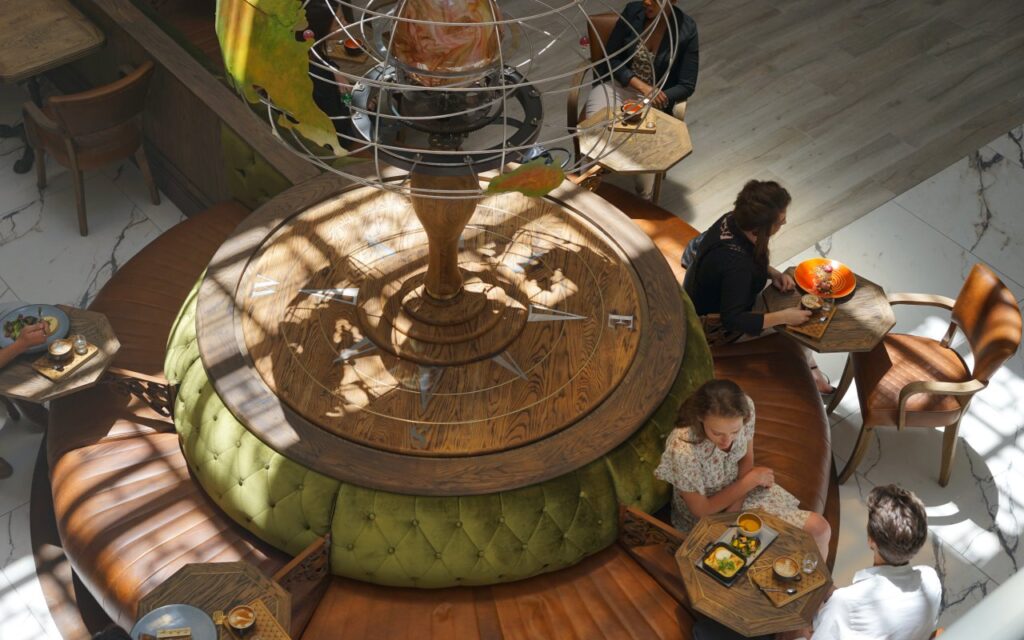
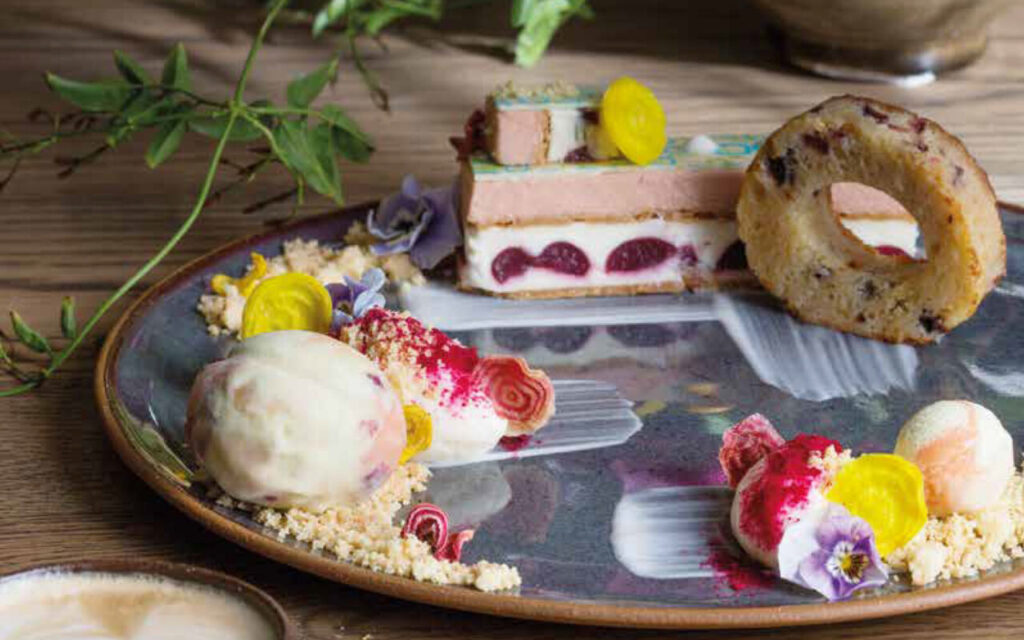
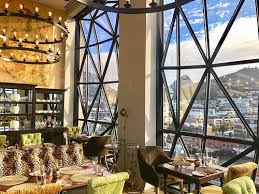
The Granary Café at The Silo Hotel takes the luxury positioning even further, combining industrial elegance – the building was once a grain silo – with sweeping views of the V&A Waterfront and Table Mountain. It’s as much a dining destination as a cafe and signals that at the luxury end of the market, the distinction between café and restaurant is dissolving. Image of The Granary Cafe:
Origin Coffee Roasting, founded in 2005 by Joel Singer, is widely credited with launching the specialty coffee movement in Cape Town. From its Woodstock roastery – where guided coffee tastings are offered – to its De Waterkant bakery café, Origin helped train a generation of baristas who have since gone on to open their own spaces. Image of Origin Coffee Roasting:
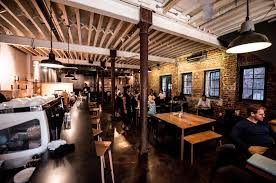
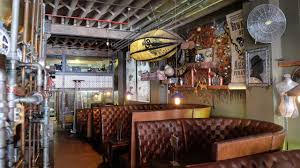
Truth Coffee Roasting, with its theatrical steampunk-inspired interior in the city centre, was an early pioneer of the idea that a café could be a destination in its own right – not just a place to get coffee, but a place to have an experience. Okja in Camps Bay and Kloof Street, represents a newer generation of premium cafes that blend exceptional baking, plant-based philosophy and considered interiors into a coherent identity. Image of Truth Coffee Roasting:
Johannesburg has historically been associated with fast-paced commercial culture rather than the slow-coffee ethos, but that’s changing. Rosebank, in particular, has emerged as what one local guide calls the city’s “coffee capital” – with nearly every major coffee brand operating within walking distance of one another, and a growing number of premium independents carving out distinct identities.
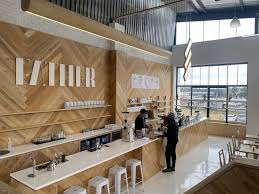
Father Coffee in Kramerville – described as feeling like a cathedral for caffeine – is often cited as Joburg’s most respected specialty coffee roastery. It represents the minimalist, concept-space aesthetic that defines luxury café culture. And its Rosebank branch in The Zone brings that sensibility into a high-footfall retail environment. Image of Father Coffee:
Proud Mary in The Hyde in Rosebank exemplifies the hotel-café crossover that is increasingly common in the premium segment – glam restaurant and wine bar with an adjoining coffee and patisserie brand, Proud Coffee, that opens onto a prime street terrace.
Bean There Coffee Company in Milpark, as South Africa’s first exclusively Fairtrade-certified roastery, has built its premium positioning around ethics and transparency – single-origin African beans, open-plan roasting, and a laid-back space. Image of Bean There Coffee Company:
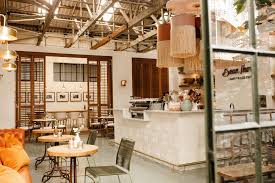
Naked Coffee, which originated in Joburg before expanding to Cape Town’s Sea Point, combines a chic interior with a reliable, quality-focused menu and a loyal following built over a decade. Image of Naked Coffee:
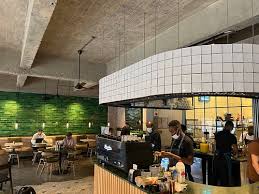
What makes a luxury café: The luxury café is not defined by price alone. There’s the sense that every element of the space, the menu and the service has been considered. This can mean a bespoke coffee blend created exclusively for a single venue (as at Labotessa in Cape Town, which services a blend developed specifically for the café). It can installing the world’s first of a particular espresso machine. It can mean sourcing ceramics from local artists, training baristas to championship standard, or designing an interior that earns its own Instagram following.
It means treating the café visit as an experience worth having, a destination, not just a pit stop. The question is whether the next generation of operators can justify the premium.